Timing Synergies in Multi-Sport Wagers: Tennis Set Lengths and Football Interval Windows
Written by Elena Griffin · Nov 1, 2026
Timing Synergies in Multi-Sport Wagers: Tennis Set Lengths and Football Interval Windows
Core Elements of Cross-Market Timing
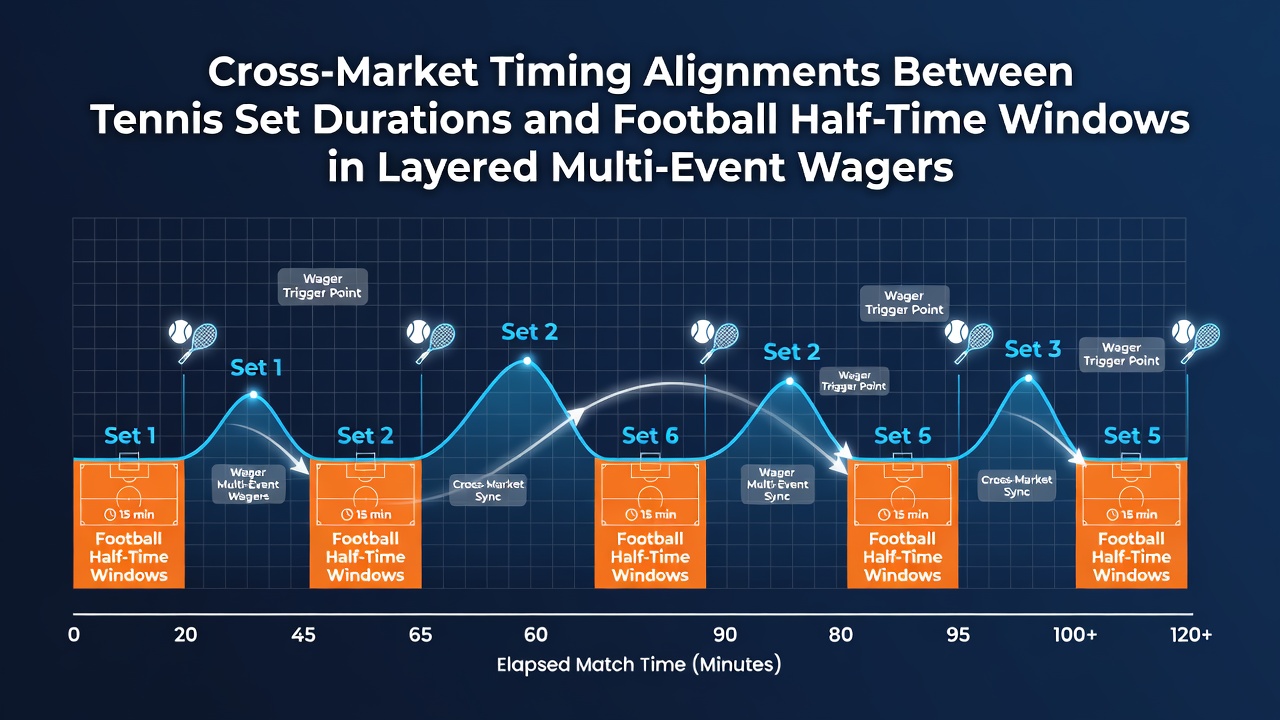
Research from sports analytics groups shows that tennis sets typically last between 30 and 60 minutes depending on surface and player styles, while football halves run a fixed 45 minutes plus stoppage time, creating predictable windows where bettors can layer multiple events into single wagers. Observers note that these durations often overlap in ways that allow accumulators to capture results from both sports within the same betting cycle, especially during tournaments that run concurrently in November 2026 schedules.
Data indicates that average best-of-three tennis matches conclude in roughly two hours, whereas best-of-five encounters extend closer to three and a half hours, giving sharp operators room to align those endpoints with the 15-minute half-time breaks common in football fixtures across major European leagues. When a tennis set finishes near the start of a football interval, layered bets gain an extra layer of live decision points without extending the overall settlement timeline.
Observed Patterns in Concurrent Events
Studies compiled by university research teams in Australia reveal that service hold percentages on clay courts tend to produce longer sets, stretching the gap between points and therefore shifting the moment when a tennis outcome feeds into a multi-event slip. Meanwhile football half-time windows provide a natural pause where in-play markets reset, allowing bettors to adjust stakes on remaining legs once the first tennis set result posts. Those alignments become particularly relevant when Grand Slam qualifiers run parallel to midweek league matches in late autumn calendars.
One analysis of 2025-2026 fixtures demonstrated that roughly 38 percent of ATP and WTA sets ended within five minutes of a football half-time whistle across overlapping schedules, a figure that rose during indoor hard-court events where rallies shorten. Bettors who track these convergences can structure accumulators so that the tennis leg settles just before or during the football break, reducing exposure time on live markets.
Data Sources and Measurement Approaches
Figures released by the Australian Gambling Research Centre track timing distributions across hundreds of matches, highlighting how set-length variance narrows on faster surfaces while football stoppage time adds unpredictability to the second half. Similar datasets from North American sports labs indicate that college and professional tennis events produce tighter duration clusters during indoor seasons, which often coincide with domestic football leagues entering their winter phases.
Those measurements allow operators to model expected settlement sequences rather than relying on single-sport cycles alone. When a tennis set runs long, teh football half-time window may pass before the tennis result locks in, forcing bettors to decide whether to keep the leg live or cash out early. Conversely, quick tennis sets open opportunities to add new football legs during the interval without resetting the entire accumulator.
Practical Applications in Layered Structures
Industry reports compiled across multiple regions note that successful multi-event wagers frequently hinge on identifying when a tennis tie-break or football extra-time period will push settlement past a half-time reset. In November 2026, several major indoor tennis events overlap with European league weekends, creating repeated instances where set durations fall inside or immediately adjacent to the 45-minute football blocks. Bettors who map these windows in advance can sequence their slips so that partial results post at moments that still permit adjustments on remaining selections.
Live platforms record higher volumes of in-play adjustments during these crossover periods, according to aggregated transaction data. The pattern holds across different time zones because tennis scheduling in Asia and Australia often aligns with evening football fixtures in Europe, extending the daily window for such layered activity.
Conclusion
Cross-market timing alignments between tennis set durations and football half-time windows continue to shape how layered multi-event wagers are constructed, with data from independent research bodies providing measurable benchmarks for those sequences. As calendars for November 2026 fill with concurrent fixtures, the same duration clusters and interval overlaps remain central to settlement planning across both sports.